Sunday, 28 June 2015

Pryme Radio Products features Bluetooth accessories in latest additions to product portfolio

The IWCE was a great event this year, with lots of great companies and exhibitors. Particular noted showcase's were Pryme and their new Bluetooth range. You can find the original source of the article on this website 

Pryme Radio Products recently showcased four accessories that leverage Bluetooth technology as the California-based manufacturer continues to expand its product portfolio supporting both two-way-radio and cellular users.

Introduced at IWCE 2015, Pryme Radio Products’ new BTH-600 is a heavy-duty Bluetooth wireless speaker microphone that supports push-to-talk (PTT) capability on two-way radios, according to Pryme Radio Products President Dave George. By loading different software into the headset, the user can utilize PTT applications that are available on cellular phone, he said.


Based on Pryme’s Storm Trooper platform, the BTH-600 is waterproof and utilizes an off-the-shelf, rechargeable cell-phone battery, George said.

“One of the coolest things about it is that it’s got a big batteryâ€"it can run for 40 hours of continuous duty on a single charge, and it can be in standby mode for 30 days,” George said during an interview with IWCE’s Urgent Communications. “

The BTH-300 is a small, lightweight clip-on box that converts any wired Apple iPhone accessory into a Bluetooth headset, according to company literature. Featuring 10 hours of battery life, a built-in PTT switch and a built-in noise-canceling microphone, the BTH-300 can be used during covert operationsâ€"there is no visible LED lightâ€"and supports both radio and cellular communications, George said.

“This will work both with radio dongles and with cell phones at the same time,” he said. “It has a separate button on it for answering phone calls, and it has technology inside of it that will allow you to prioritize whether you want to ignore the two-way-radio calls while you are on you cell phone, or whether you want to ignore the cell phone calls when you are on a two-way-radio call.”

For those using Motorola Solutions’ XPR-3300/3500 series radios on a MOTOTRBO network, Pryme Radio Products has developed the BT-M11, which is a Bluetooth adapter that attaches directly to the radio with a patent-pending locking mechanism, George said. Previously, Bluetooth chips were so large that Pryme’s Bluetooth adapter had to be attached with a cable, he said.

“Now that the Bluetooth chips have gotten much smaller, we’re finally able to get it inside the small connector,” George said. “So, we’ve designed a new small connector that will attach directly to the side of the radio and contain the Bluetooth technology.”

Wednesday, 24 June 2015

Clinton Portrait Shows Famous Liar

Presidential portrait artist Nelson Shanks has revealed that he incorporated a hidden message into his painting of former US President Bill Clinton.

In an interview with the Philadelphia Daily News, the artist told the world (well, Philadelphia) that a curiously long shadow, apparently cast by the plant next to the Prez, was, in fact, cast by a mannequin in a blue dress that he had in his studio at the time he painted the portrait.

According to Mr. Shanks, he did this as an allusion to Clinton’s famous affair with White House Intern Monica Lewinski, the woman who famously, um, relieved The President’s stress levels - before using her highly prized oral skills to catapult herself into a career in shit telly, low-level celebrity and (I kid you not) fashion design.

“Have the same handbag that I put down on the Oval Office couch in order to sexually service our nation’s president! Just $9.99” the ad copy (probably) says, as the glass ceiling lowers to the point that it actually constricts the breathing of female professionals the world over.

The worst of it was that, although I’ll grant you that Monika was better looking than Hillary, she was still a bit of a minger.

Aaaaaanyway, getting back to the point somewhat, the inclusion of the blue dress hints at the DNA evidence (and I flat-out am not saying what kind of ‘evidence’, but I’ll pretend it was ‘spit’. Hell, maybe it was!) that was famously left on Lewinski’s blue dress. Basically, Shanks was trying to make a point about “the shadow” that Clinton cast on the office of President. Or something.

Eventually, after famously denying that he had enjoyed “sexual relations with that woman, Miss Lewinski” (possibly as much ashamed of her slightly minging appearance as the fact that he’d lied to the Nation), Clinton was forced to fess up, and America’s right-wing press had a field day.

Therefore, according to Mr. Shanks, Bill Clinton is “probably the most famous liar of all time”.

Apparently, Mr. Shanks was knocked quite severely on the head and was completely unconscious for the 8 f*cking years that George W. Bush treated America (and the rest of the world) like his own personal nymphomaniac intern.

During the course of this era of idiocy, Bush openly lied about “securing weapons of mass destruction in Iraq” and then used said disinformation to lead an illegal invasion/occupation of another country.

Oh yeah, he also rigged an election, too (probably).

Now, perhaps I should cut Mr. Shanks some slack, I mean, after all, during Bush’s reign of terror, Dubya could have been shagging every White House intern in the damned building five times a night, but nobody could tell because he was there were too many bombs whizzing about in a war that cost TWO TRILLION DOLLARS and resulted in 174,000 dead Iraqis (with 123,000 of that number being innocent civilians whose only crime was that they lived in Iraq), just so he could earn a bit of extra bank for his dad’s golf buddies.

So yeah, nicely done.

Now, I’m not defending Clinton for scoring a BJ outside the confines of his marriage (however, if even half the stuff I’ve heard about marriage is true, then that’s the only place he was likely to find one!), I’m just saying that Clinton’s ‘dark shadow’ concerned an extra marital affair, the worst consequence of which was the rise of Monica Lewinski as a quasi-celebrity â€" his wife didn’t even chuck him over it. Whereas, if we’re playing the ‘blame game’ here, his successor’s portrait should feature him snorting cocaine off of a Guantanamo prisoner and wiping his arse with the US flag, whilst at the same time dancing naked atop an oil tower crudely fashioned from hundreds of dead Iraqi civilians. That’s all.

Sunday, 14 June 2015

How Do Passive Noise Cancelling Headphones Work

It is quite unfortunate that for most music lovers, there is a myriad of ambient noises and sounds that can really interfere with the music coming from your earphones, Now, if you have ever once tried to listen to music on a bus, train or airplane, then you are intimately familiar with this problem. The engine's roar and/or the incessant chatter from fellow passengers, make extremely hard to hear the sounds coming from your speakers, even if they are on or inside your ear. Fortunately, to combat this dilemma, innovators have come up with far more enjoyable way of listening to your music- Noise canceling headphones of which there are two types:

- the active- the passive types.

HOW PASSIVE NOISE CANCELLATION WORKS

The simplest type of noise cancellation is the passive noise reduction, sometimes called noise isolation. From a technical perspective, just about any kind of earphones are able to provide some degree of passive noise reduction (though some are designed for it more than others). This is mostly as a result of the materials used to make the headphones which block out particular sound waves, mostly those of a higher frequency. The absolute best type of passive noise canceling headphones are however the circum-aural types which are specifically engineered to maximize the amount of noise it filters. We will take a look at this some more in a bit. Essentially, where passive noise isolation, the head phones are so designed that they will fit snugly into or around each ear. This makes it significantly harder for noise to escape and bother others in your immediate environment, and it also prevents the noise in your environment from making it hard for you to listen to your music. Passive noise cancellation earphones tend to have very large ear pieces, with large pieces of foam wrapped around them. You need to squeeze the foam into your ear which them provides a perfect seal for the ear canal, or they fit just right around your ear.


All this is saying that passive noise cancelling earphones in essence imitate what happens when you choose to cover your ears with your hands or put some ear plugs in. The excess padding is always done with materials that naturally act as sound barriers- fitting into your ear and sealing off the ambient noise.

Supra-aural headphones, which are earphones placed over and around the ear, instead of in or around it, are probably the very worst at any form of sound cancellation. They tend to be low density, small and very light, as such there is really not much padding to block and outside sound or ambient noise from entering the ear. Furthermore, because they are only placed on the ear, there is a great deal of space for any external noise to travel around them and into the ear canal. It is on very rare occasions that you actually find a top quality supra-aural earphone, because they are simply unable to provide the kind of noise cancellation that circumaural or in ear headphones provide. Supra-aural earphones are lightly manufactured and as such are usually marketed for customers who are not particularly focused on headphone quality, but mostly looking for basic functionality.

Take for instance, most desktop or video game headsets tend to be supra-aural. They are mostly preferred because they are light and as such are suitable for the long, extended hours they will be used. Additionally, in cases like these audio quality is not of great importance since it they are mostly used for spoken communication, where clarity is the focus and nothing else really matters.

When it comes to passive noise cancelling headphones, circumaural or around the ear headphones provide a significantly better noise cancellation quality. They are bigger in size and as such they include more noise reduction material. This in turn creates a far better buffer against outside noise- think beats headphones. Essentially this means that they are heavily packed with layers of high top quality high density foam,, or some other sound absorbing material. Admittedly, this then makes them a bit heavier than the average headphones, but since they completely block the ear off, they keep out up to 95% of outside noise. Well, this is assuming that the circumaural earphones you choose, fit your ears snugly. If they are either poorly designed or not the perfect fit then ambient noise will still be able to make its way in.

Friday, 22 May 2015

Motorola Earpieces For All Types of Industry

Are you in the security industry? Using Motorola Walkie Talkies? Need the ability to not have your conversation overheard, or need to silent on an event or restaurant service area, yet still in contact with your team? Do you need to walk and talk, so that you can multitask, or get other tasks completed while you are on the phone?

Then Motorola is the company, and the earpiece, for you and your team.

If you are in security, events or hotel management, you wouldn't necessarily want everyone to be able to see that you are wearing an earpiece, and there are a variety of ways to minimise the “I have a radio in my pocket and I boss people around” kind of look.

First clip the charged radio on to your belt. Select the station or frequency that you will be using. Make sure that the team are all on the same station. Attach the Motorola earpiece to the radio, by slotting the two prongs at the bottom of the cable in to the side of the Motorola walkie talkie. You will see there is a big prong and a small prong, make sure you have them the right way round.

Run the length of the earpiece cord under your shirt, and pop the top out by the collar or top button of your shirt, thereby hiding the wire from site. You will see a clip portion with a little speaker button it. That can be clipped on to your tie, shirt front or collar to allow you to speak in to it easily.

The Motorola earpiece is a curved half moon shape. Make sure the wire is tucked securely in to the casing, as it can sometimes come out during storage and insertion. Clip the half moon shape over the ear and insert the round black earpiece in to the ear. The earpiece is covered with a removable soft cover that can be taken off and washed if the radio’s are used by different people, in the interest of best hygiene practises.

If you are going for minimal look, arrange your hair to cover the earpiece or cord if possible. There are also high security options that run up the back of the neck and over the ear, and come in see through, clear tones to minimise the obviousness of them. These can be secured in to place using see through tape made especially for this purpose.

Motorola also makes very hi-tech options for security personnel, with items that can clip on to sunglasses, shirt cuffs etc, and give a very FBI, protecting the president look, but are extremely functional. They ear buds are also more fitting and are snug in the ear, to allow for better audio.

To speak through the microphone portion bring the unit close to your mouth. Press the button in and wait one second before speaking, to allow time for the radio’s to connect. When you are finished speaking, release the button. Wait for your team member to respond to your message. Remember to talk slowly and clearly. Although Motorola radios are really great quality, you are still a distance away from each other, and things such as mobile phones nearby, thick walls or ceilings, being underground etc can interfere with the signal and reception.

If you are a Motorola mobile phone user, then there are also a wide variety of Motorola earpieces available, that won’t make you look like a call centre agent, or hurt the inside of the ear if you wear them for long periods at a time. The Whisper Smooth Talk, comes with a retractable boom with 4-mic CrystalTalk and offers the user cutting edge clarity and wind noise reduction, especially useful if you are calling from outside, or talking while you are walking.

Bluetooth headsets clip over the ear, and allow you to connect wireless to your phone, which can be in your pocket or bag, and allow you to walk along and talk, without any cables or wires hanging around and getting in the way.

Motorola has been innovating in the phone and walkie talkie industry for many years, and the constant innovation and bettering of their Motorola earpieces and products for ease of use and comfort is inspirational.

Thursday, 21 May 2015

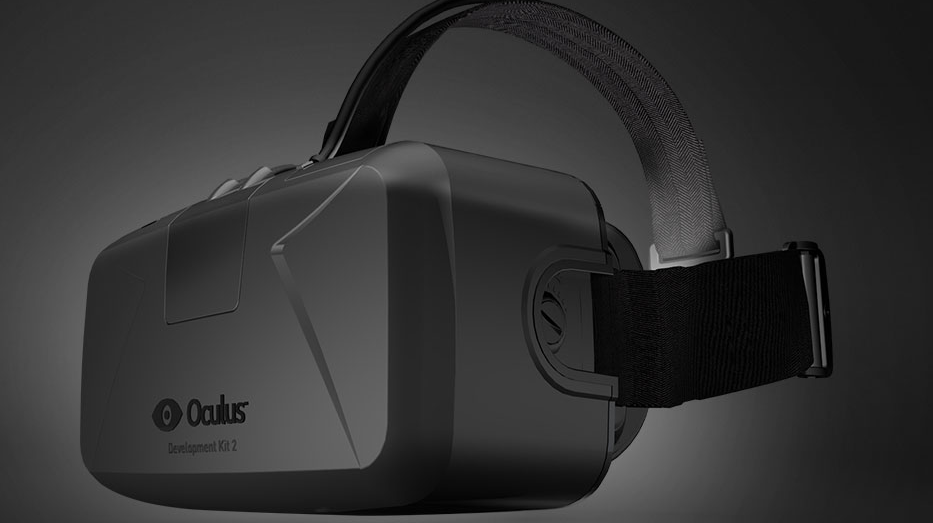
UK SURGEON EXPERIMENTS WITH OCULUS RIFT TO MAKE ‘VIRTUAL SURGEON’

A British surgeon wants to make the operating room virtual with the Oculus Rift headset.

Dr. Shafi Ahmed, a laparoscopic and colorectal surgeon, has already worked to integrate Google Glass into his lessons as an associate dean at the Barthes of London Medical School.

As co-founder of the tech company Medical Realities, Ahmed now wants to use the virtual reality system Oculus Rift to create the “Virtual Surgeon,” a pilot program that would allow medical students to practice surgeries inspired by actual operations before setting foot into an operating room.

Ahmed and his team presented Virtual Surgeon at the wearable technology show this week.

“It’s very easy to train people in a correct operation,” Ahmed told ABC News on Friday. “It’s not so easy when things go wrong. … We’re all put in situations where things can go wrong.”

Last month, Ahmed took the first steps towards creating that program by making a 360-degree video of an operation.

Anyone wearing an Oculus Rift headset could then be able to get an immersive view of the laparoscopic procedure when the video is played back.


The virtual reality experience of Oculus Rift is a better simulation for students, Ahmed said, because it can more easily mimic a real operating room.

“It’s as close as you can get to replicating it,” he said, noting that education should always embrace the newest technology and a virtual reality operating room could be the next major tool for students.

The Oculus Rift headset has not been made available to consumers yet, but the company was acquired by Facebook for $2 billion last year. The headsets have already been utilized by a range of people, from real estate agents to driving instructors and fitness companies.

The oculus Rift has huge potential, this is a great one where it can save lives. Much like pilots, racing drivers and firefighters use simulators to improve training this is a good thing, the only issue will be the standard of the software used with the headset.

Original source - http://kticradio.com/abc_health/uk-surgeon-experiments-with-oculus-rift-to-make-virtual-surgeon-abcid35269105/

Wednesday, 20 May 2015

Photographic Find of the Century Depicts Trench Life in WW1

Although it meant disobeying direct orders (and a court martial if he was discovered), Lance Corporal George Hackney obviously felt a duty to document The Great War from a soldier’s perspective. Now, to commemorate the centenary of the First World War, his incredible photographs are being displayed in public for the first time.

The astounding collection, which includes candid photographs taken in the British trenches - and at least one amazing shot of a German surrender in 1916, was compiled between 1915, when Hackney was first sent to the front lines, and 1918, when the brutal conflict finally ended, and the photographer returned home.

Before he was called up, Hackney was a keen amateur photographer, and it shows. His pictures demonstrate a very accomplished sense of composition, but never feel forced or especially posed for (as some photography from the era can). In fact, the images are easily among the most intimate and credible pictures that exist from the conflict.

Among the most remarkable shots is a poignant image of a lone soldier writing a letter home, as well as another showing a group of soldiers (in full uniform) casually napping on the deck of the ship that would eventually deliver them to the front lines.

At the time these photographs were taken, no unofficial photography was allowed on the front lines. However, using a portable folding camera about the size of a modern smart phone, the Northern Irishman was able to document the war effort discreetly and respectfully.

Hackney then gave the photographs to his own family upon his return. In addition, many of his pictures were given as gifts to the families of the men photographed, sometimes offering grieving loved ones a chance to see their missing husband, brother or son, one final time.

To cite one such example, Hackney’s Sergeant, James Scott, was killed at the Battle of Messines in May 1917. After Lance Corporal Hackney returned home, he presented Scott’s family with three pictures of him, including a striking depiction of the officer looking proud and dashing on horseback.

The Sergeant’s descendant, Mark Scott, was instrumental in uncovering the stories behind these wonderful, and often profound, images...

Hackney’s pictures also provide excellent accompaniment to the war records of the men in question, rendering them as much more than simply names and numbers, or even as symbols of pure courage and sacrifice. Hackney’s photographs present these remarkable men to a new generation as simple Human beings fighting through an incredibly difficult time to be alive.

A photograph taken at County Antrim, which depicts Hackney’s friend John Ewing writing a diary entry (or possibly a letter home), adds a Human element to the historical facts that Ewing was eventually promoted to Sergeant and subsequently won the Military Medal for bravery in the field...

Stories like this abound in Hackney’s work, which ably presents the war in a far more evocative way than the official press photographs and propaganda of the time could ever have hoped to.

When George Hackney passed away in 1977, his family donated the pictures to the Ulster Museum, where they stayed in the Museum’s archives for over 30 years. These unique, powerful documents were, in turn presented to TV Director Brian Henry Martin by museum curator Dr. Vivienne Pollock, in 2012. Martin was shown the images alongside a collection of Hackney’s personal diaries and was captivated by them.

Lance Corporal Hackney eventually became the subject of a BBC Documentary, directed by Martin, entitled, ‘The Man Who Shot The Great War’. The show aired in Northern Ireland earlier this month.

In addition, Hackney’s work is soon to be the subject of a major exhibition at the Ulster Museum.

Mr. Martin is now bringing 300 of Hackney’s images to the BBC for future use, although it is estimated that there are around 200 more that are undiscovered at the time of writing.

Amanda Moreno of the Museums of The Royal Irish Regiment, told Yahoo! News that, “As a collection of photographs of the First World War, they are totally exceptional.”

Interviewed for the film, Franky Bostyn, Chief of The Belgian Ministry of Defense said, "I think you made the photographical World War One discovery of the century."

100 years on, George Hackney’s unique, vivid and (above all) brave photography presents us with a deeply Human portrait of life in the trenches of The Great War.

Tuesday, 19 May 2015

How to be a better headphone listener

When you're listening to speakers the sound comes from "over there," but with headphones where is the sound? A lot depends on the recording and the headphones. With mono recordings the sound is centered inside your head, with stereo the sound picture is more complicated. Vocals, or any sound mixed to appear centered between the left and right channels, will be inside your head, like a mono recording. The sounds over to the left and right might come from next to your ears.

Listening over one of the better open-back full-size headphones, the sound might feel like it's surrounding you. You're in the middle of the sound field, or it might come from slightly above your head. The headphones melt away and you are one with the music. Sometimes when I'm watching a movie I forget the headphones. The sound isn't over there, it's all around me; I'm in the middle of a sound "bubble."

I'm not suggesting that headphones can ever mimic what we hear from speakers. Headphones can't do that, but the downside to speakers is they can never be heard directly; the speakers' sound is combined with the room's reflections, reverberations, and other forms of acoustic interference. With headphones the sound "couples" directly to your ears, so you have a far more intimate connection to the music.

With full-size over-the-ear headphones, the contours of your outer ears direct the sound to your inner ears in the same way sound is heard from speakers. In-ear headphones "bypass" the outer ear and produce a more direct connection to the recording. With purely acoustic music, the sound over headphones takes on what I call a microphone perspective, you hear what the mics "heard."

That's not the case with electronic music since no microphones were used to make the recording. Even so, I find lots of electronica sounds amazing, and some of the best albums were mixed to produce out-of-head stereo imaging. Listen for depth, does the sound seem very close to your ears or further away? Recordings vary a lot in their stereo imaging, but the more closely you listen, the more aware you will be of spatial cues in headphone listening. Try some of Brian Eno's ambient albums like "On Land" and "Apollo" to hear what I'm talking about.

To get started, relax and focus on the sound. Your surroundings should be fairly quiet, close your eyes, and sink into the music. After a few minutes the separate left, center, right stereo perspectives should fall away, and your head will feel like it's in the center of an expansive sound field.

Share your thoughts on spatial headphone listening below.

We found this excellent article here and as you can see it give us valuable information on why headphones aren't better than speakers, but if you don't want your neighbors complaining or your family moaning, then you'll have to wait for the technology to come up with perfect acoustic sound.